
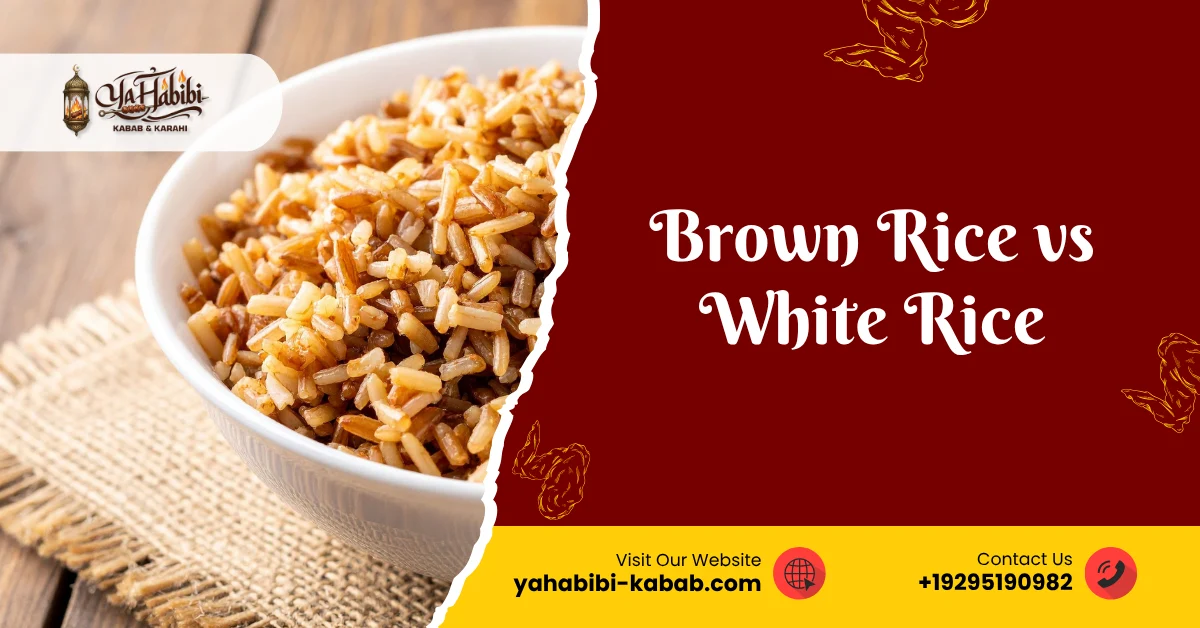
Brown rice and white rice come from the same grain, but the way they are processed makes them different. Brown rice keeps the bran and germ, making it a whole grain that naturally contains more dietary fiber, vitamins, and minerals. White rice has these outer layers removed during processing, giving it a softer texture and a milder taste. Both provide healthy carbohydrates that fuel your body, and both can be part of a balanced diet. The better choice depends on your health goals, dietary needs, and personal preferences. Whether you're preparing meals at home or enjoying rice with grilled kababs or flavorful karahi in Astoria, understanding these differences can help you choose the rice that best complements your meal and lifestyle.
Quick Overview
|
Question |
Quick Answer |
|
What is brown rice? |
Brown rice is a whole grain that retains the bran and germ, making it higher in fiber and several nutrients. |
|
What is white rice? |
White rice is milled to remove the bran and germ, resulting in a softer texture and longer shelf life. |
|
Which is healthier? |
Both have a place! Brown rice naturally delivers more whole-grain nutrients and fiber, while high-quality white rice is incredibly gentle on the digestive system. |
|
Which has more fiber? |
Brown rice contains significantly more dietary fiber per serving than white rice, which supports long-lasting fullness. |
|
Which is easier to digest? |
White rice is generally easier to digest because it contains less fiber. |
|
Which is better for weight loss? |
Neither causes weight loss on its own. Brown rice may help you feel full longer because of its higher fiber content, but portion size and overall eating habits matter most. |
|
Which is better for diabetes? |
Brown rice may support steadier blood sugar levels due to its fiber content, but either type can fit into a healthy eating plan when eaten in appropriate portions and paired with protein and vegetables. |
Brown Rice vs White Rice: What's the Difference?
Brown rice and white rice both come from the same grain. The difference lies in how each one is processed after harvesting. Every grain of rice has three main parts: the bran, the germ, and the endosperm.
Brown rice is a whole grain because it keeps all three layers. The bran provides dietary fiber, the germ contains healthy fats, vitamins, and antioxidants, and the endosperm supplies carbohydrates that give your body energy.
White rice goes through an additional milling and polishing process that removes the bran and germ, leaving only the endosperm. This gives white rice its smooth texture, mild flavor, and longer shelf life. However, removing these outer layers also reduces some of its natural fiber and nutrients.
These processing differences affect more than appearance. Brown rice has a slightly nutty flavor and a chewy texture, while white rice is softer, fluffier, and cooks more quickly. Both can be nutritious choices, but they offer different benefits depending on your dietary needs and the type of meal you're preparing.
Brown Rice Nutrition vs White Rice
Although both types of rice provide healthy carbohydrates and similar calorie counts, their nutritional profiles are not identical. Brown rice naturally contains more dietary fiber and several important minerals because it retains the bran and germ. White rice, on the other hand, is often enriched after processing to replace some nutrients that are lost during milling.
The values below are approximate for one cooked cup and may vary slightly by variety and brand.
|
Nutrient |
Brown Rice |
White Rice |
|
Calories |
~218 |
~205 |
|
Carbohydrates |
~45.8 g |
~44.5 g |
|
Protein |
~5.0 g |
~4.3 g |
|
Fiber |
~3.5 g |
~0.6 g |
|
Fat |
~1.6 g |
~0.4 g |
|
Magnesium |
Higher |
Lower |
|
B Vitamins |
Naturally present |
Commonly enriched with folate and B vitamins |
|
Manganese |
Higher |
Lower |
|
Iron & B Vitamins |
Naturally intact in the germ layer | Varies (Standard grocery brands are often enriched; premium imported Basmati is left natural) |
While many commercial white rice products in Western supermarkets are fortified with iron and folate after milling, premium culinary varieties like long-grain Basmati focus on offering a light, airy texture that won't weigh you down. Both options can comfortably fit into a healthy lifestyle, making the best choice entirely dependent on your digestion, your daily fiber targets, and the specific meal you are complementing.
Health Benefits of Brown Rice vs White Rice
Brown rice and white rice each offer unique health benefits. Rather than thinking of one as "good" and the other as "bad," it's more helpful to understand when each option may be the better fit. Your activity level, digestion, health goals, and the type of meal you're preparing all play a role in choosing the right rice.
|
Core Feature |
Brown Rice (Whole Grain) |
White Rice (Milled & Polished) |
|
Dietary Fiber |
Naturally higher in fiber, which supports digestion, gut health, and helps you stay full longer. |
Lower in fiber, making it gentler on the digestive system. |
|
Vitamins & Minerals |
Naturally rich in magnesium, manganese, selenium, and other nutrients found in the bran and germ. |
Many varieties are enriched with iron, folate, and B vitamins after processing. |
|
Blood Sugar Response |
Fiber slows digestion, which may promote a lower glycemic response and more sustained energy. |
Digests more quickly and may cause a faster rise in blood sugar, depending on portion size and what it's served with. |
|
Digestibility |
May not be ideal for everyone because of its higher fiber content. |
Easier to digest and often preferred for digestive sensitivity or low-fiber diets when recommended. |
|
Energy Source |
Provides steady energy as carbohydrates are digested more gradually. |
Delivers carbohydrates more quickly, making it a practical option after exercise or for active lifestyles. |
Brown Rice vs White Rice: Which Is Better for Weight Loss?
When comparing brown rice vs white rice for weight loss, there isn't a single winner. Both have similar calorie and carbohydrate content, so the biggest factors are portion size, overall diet, and physical activity.
Brown rice contains more dietary fiber, which slows digestion and helps you feel full for longer. This added satiety may make it easier to manage hunger between meals and reduce unnecessary snacking. If you're trying to eat fewer calories throughout the day, choosing fiber-rich foods like brown rice can be one helpful strategy.
White rice has slightly fewer calories per serving and a softer texture, making it a versatile choice for many meals. It can still fit into a healthy eating plan when served in appropriate portions alongside lean protein and vegetables.
Instead of focusing on one type of rice alone, aim to build balanced meals. Whether you choose brown rice or white rice, pairing it with grilled chicken, fish, legumes, or vegetables can help create a satisfying meal that supports your nutrition goals.
Brown Rice vs White Rice for Blood Sugar
Brown rice generally has a lower glycemic index than white rice because it retains its bran and dietary fiber. Fiber slows digestion, which may lead to a more gradual rise in blood sugar after eating.
White rice is digested more quickly, so it may have a higher glycemic index depending on the variety and how it is prepared. However, the type of rice is only one part of the picture. Portion size and the rest of your meal also influence your body's response.
For a more balanced meal, consider pairing either brown rice or white rice with lean protein, healthy fats, and plenty of vegetables. For example, serving rice with grilled kababs, baked salmon, roasted vegetables, or a flavorful karahi can help create a more satisfying meal with a better balance of nutrients.
If you're managing your blood sugar or following a specific eating plan, it's always a good idea to speak with a healthcare professional or registered dietitian for personalized advice. For most people, both brown rice and white rice can be included as part of a balanced diet when enjoyed in appropriate portions.
Brown Rice vs White Rice: Pros and Cons
Both brown rice and white rice have advantages, and the better choice depends on your dietary needs, cooking preferences, and the meal you're preparing. Brown rice offers more natural fiber and minerals, while white rice is valued for its soft texture, quick cooking time, and easy digestibility. The comparison below highlights the key differences to help you decide which option best fits your lifestyle.
|
Feature |
Brown Rice |
White Rice |
|
Nutrition |
Naturally rich in fiber, vitamins, and minerals because it retains the bran and germ. |
Lower in natural nutrients after milling, but many varieties are enriched with iron, folate, and B vitamins. |
|
Fiber |
Higher fiber content supports digestion and helps you feel full longer. |
Lower fiber content makes it easier to digest. |
|
Cooking Time |
Takes about 35–45 minutes to cook. |
Usually cooks in 15–20 minutes. |
|
Texture |
Chewy and slightly firm. |
Soft, light, and fluffy. |
|
Taste |
Mild, nutty flavor. |
Mild, neutral flavor that pairs well with many dishes. |
|
Shelf Life |
Shorter shelf life because it contains natural oils in the germ. |
Longer shelf life due to the removal of the bran and germ. |
|
Digestibility |
Higher fiber may not suit everyone, especially those with digestive sensitivity. |
Easier to digest and commonly chosen for gentle or low-fiber meals when appropriate. |
|
Best Uses |
Grain bowls, roasted vegetables, grilled chicken, salmon, and high-fiber meals. |
Karahi, curries, kababs, biryani, stir-fries, and everyday family meals. |
There isn't a one-size-fits-all answer when choosing between brown rice and white rice. Brown rice is often preferred for those looking to increase their fiber intake, while white rice is a practical option for quick meals, active lifestyles, and recipes where a soft, fluffy texture works best. Both can be part of a balanced diet when enjoyed in appropriate portions alongside lean protein, vegetables, and healthy fats.
Tips for Choosing the Right Rice
Choosing between brown rice and white rice doesn't have to be complicated. Consider your personal goals, the meal you're preparing, and your lifestyle.
- For fitness goals: Brown rice may be a good option if you want more fiber and longer-lasting fullness, while white rice is often preferred before or after workouts because it's easier to digest.
- For digestion: If you have a sensitive stomach or have been advised to follow a low-fiber diet, white rice may be the more comfortable choice.
- For different meals: Brown rice works well in grain bowls, salads, and meals with roasted vegetables, while white rice pairs naturally with curries, grilled kababs, karahi, stir-fries, and many traditional dishes.
- For personal preference: The best rice is the one you'll enjoy eating consistently. Some people prefer the nutty flavor and chewy texture of brown rice, while others enjoy the soft, fluffy texture of white rice.
- For cooking time: If you're short on time, white rice cooks much faster. Brown rice takes longer but may be worth the extra time if you prefer its texture and nutritional profile.
- For dietary needs: Your age, activity level, digestion, and overall eating habits all influence which rice is the better choice for you.
Ultimately, both brown rice and white rice can fit into a healthy eating pattern. Focusing on balanced meals, reasonable portions, and a variety of nutrient-rich foods will have a greater impact on your health than choosing one type of rice over the other.
Final Thoughts
Brown rice and white rice both have a place in a healthy, balanced diet. Brown rice naturally provides more fiber and important minerals, making it a great choice for those looking to increase their whole-grain intake. White rice, on the other hand, is easier to digest, cooks more quickly, and is often enriched with essential nutrients such as iron and B vitamins.
Rather than asking which rice is universally better, consider what works best for your health goals, cooking preferences, and the meal you're preparing. Whether you're serving grilled chicken, fresh salmon, flavorful kababs, or traditional karahi, either brown rice or white rice can be a delicious addition to a well-balanced plate.
If you're in Astoria and looking to enjoy authentic Middle Eastern flavors, Ya Habibi Kabab & Karahi offers a variety of freshly prepared dishes that pair perfectly with both brown rice and white rice, giving you the flexibility to enjoy the meal that best suits your taste and lifestyle.
Frequently Asked Questions
Is brown rice healthier than white rice?
Brown rice naturally contains more dietary fiber, magnesium, manganese, and other nutrients because it is a whole grain. However, white rice can also be part of a healthy diet, especially since many varieties are enriched with iron and B vitamins. The healthier choice depends on your nutritional needs and eating habits.
Which rice has more fiber?
Brown rice contains significantly more fiber than white rice because it retains the bran layer. The extra fiber supports digestion and may help you feel full for longer.
Which rice is better for weight loss?
Neither rice causes weight loss on its own. Brown rice may help with fullness because of its higher fiber content, but maintaining a calorie-balanced diet, choosing appropriate portion sizes, and staying physically active are more important factors.
Is white rice bad for you?
No. White rice is not unhealthy when eaten as part of a balanced diet. Pairing it with lean protein, vegetables, and healthy fats helps create a nutritious and satisfying meal.
Does brown rice take longer to cook?
Yes. Brown rice usually takes about 35 to 45 minutes to cook because it still has the bran layer. White rice is typically ready in 15 to 20 minutes.
Which rice is better for diabetes?
Brown rice may produce a slower rise in blood sugar because of its higher fiber content. However, portion size and pairing rice with protein, healthy fats, and vegetables are also important. Anyone managing diabetes should follow advice from their healthcare provider or registered dietitian.
Can I substitute brown rice for white rice?
Yes. Brown rice can be substituted for white rice in many recipes. Keep in mind that it has a firmer texture, a slightly nutty flavor, and requires a longer cooking time.
Why is white rice fortified?
During milling, white rice loses some naturally occurring nutrients. Many manufacturers enrich it by adding nutrients such as iron, folate, and B vitamins to improve its nutritional value.
Which rice tastes better?
Taste is a matter of personal preference. Brown rice has a nutty flavor and chewy texture, while white rice has a milder taste and a soft, fluffy consistency that complements many cuisines.
Which rice is best for everyday meals?
Both can work well for everyday meals. Brown rice is a good choice if you want more fiber, while white rice is convenient, versatile, and pairs well with a wide variety of dishes. Choosing the one that fits your lifestyle and meal is often the best approach.