
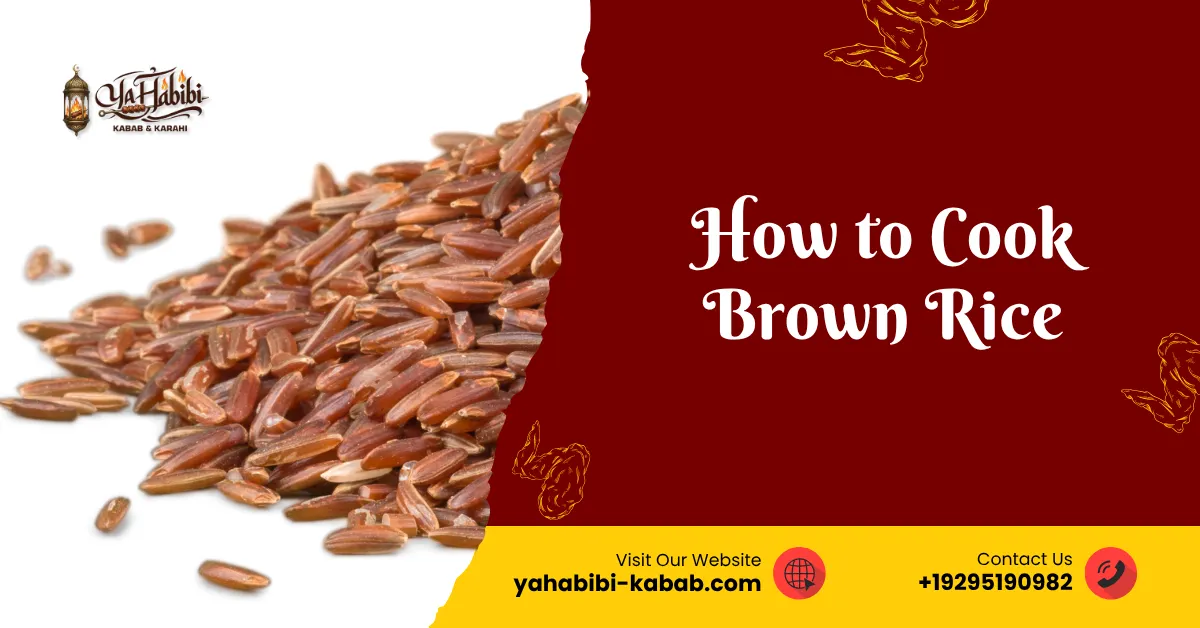
Learning how to cook brown rice is simple once you understand two things: it needs more time than white rice, and the amount of water matters.
Brown rice keeps more of the grain intact, so it has a firmer texture and takes longer to soften. Use too much water, and it may turn mushy. Use too little, and the center can stay hard.
This guide explains the brown rice water ratio, preparation steps, cooking time, resting period, and simple techniques that help you make tender brown rice with separate grains.
What Is Brown Rice?
Brown rice is a whole grain. After harvesting, the hard outer hull is removed, but the bran and germ remain. White rice goes through additional milling that removes those parts.
The USDA defines whole grains as grains containing the bran, germ, and endosperm and lists brown rice as a whole-grain food.
Keeping those outer layers gives brown rice its tan color, slightly nutty flavor, and firmer, chewier texture. It also changes how the grain behaves in the pot. Water takes longer to work through the bran layer, which is one reason brown rice cooking time is longer than the cooking time for most white rice.
That does not make brown rice difficult to prepare. It simply needs the right method and a little patience.
What You Need to Cook Brown Rice
You do not need special equipment for a basic brown rice recipe. A saucepan, water, and a few pantry staples are enough.
Ingredients
For a simple batch, use:
- 1 cup brown rice
- About 2 cups water
- ¼ to ½ teaspoon salt, or to taste
- 1 teaspoon butter or oil, optional
You can replace the water with broth if you want a more savory flavor.
Equipment
Have these items ready:
- Medium saucepan with a tight-fitting lid
- Measuring cups
- Fine-mesh strainer
- Fork
A lid that fits well is especially useful because it keeps steam inside the pot while the rice cooks.
The Best Brown Rice-to-Water Ratio
A useful starting brown rice water ratio is:
1 cup brown rice to about 2 cups water
However, the exact ratio can change depending on the variety, brand, pot, and cooking method.
For example, one major rice brand recommends 2¼ cups of water for 1 cup of its brown rice, while another recommends 1¾ cups for some of its long-grain brown rice.
That is why the instructions printed on your package should take priority when they differ from a general recipe.
For everyday stovetop cooking, 2 cups of water per cup of brown rice is a practical starting point. If you cook the same brand often, you can adjust the liquid slightly on future batches based on the texture you prefer.
Brown rice generally needs more cooking time than white rice because the bran layer remains around the grain.
How to Cook Brown Rice on the Stove
This stovetop method works well for standard long-grain brown rice. Check your package before cooking in case your particular variety requires a different amount of liquid or cooking time.
Step 1: Measure the Rice
Measure 1 cup of dry brown rice.
Using consistent measurements makes it much easier to control the final texture. Avoid estimating the rice and water by eye, especially when you are learning how to make brown rice for the first time.
Step 2: Rinse the Brown Rice
Place the rice in a fine-mesh strainer and rinse it under cool running water.
Move the grains gently with your fingers so the water reaches all of the rice. Let the excess water drain before cooking.
Rinsing helps wash away loose surface starch and any fine particles from processing or storage. This can help the cooked grains stay more separate.
Step 3: Bring the Water to a Boil
Add about 2 cups of water to a medium saucepan for every cup of brown rice.
Add salt if desired, then bring the water to a boil over medium-high heat.
You can also add a small amount of butter or oil for a richer taste.
Step 4: Add the Rice and Reduce the Heat
Once the water is boiling, add the rinsed brown rice.
Give it one gentle stir, allow the liquid to return to a light simmer, and then reduce the heat to low.
Avoid repeatedly stirring the rice while it cooks.
Step 5: Cover and Simmer
Cover the saucepan with a tight-fitting lid.
Let the rice cook at a gentle simmer for about 40 to 45 minutes, or according to the instructions for your particular rice.
Keep the heat low. A hard boil can cause the water to evaporate too quickly and may cook the grains unevenly.
Try not to lift the lid while the rice is simmering. Every time the lid comes off, heat and steam escape.
Step 6: Let the Rice Rest
When the liquid has been absorbed and the rice is tender, remove the pot from the heat.
Keep it covered and let the brown rice rest for about 10 minutes.
This is an easy step to skip, but it makes a noticeable difference. The trapped steam continues to settle through the rice and helps even out the texture. Lundberg's stovetop instructions similarly recommend keeping cooked brown rice covered for a 10-minute steaming period before fluffing.
Step 7: Fluff and Serve
Remove the lid and gently fluff the brown rice with a fork.
Do not mash or aggressively stir it. Use the fork to lift and separate the grains.
Serve it while warm with vegetables, lentils, grilled meat, sauces, or your preferred main dish.
How Long Does Brown Rice Take to Cook?
If you are wondering how long to cook brown rice, plan on roughly 40 to 50 minutes on the stovetop, followed by about 10 minutes of resting time.
The exact timing depends on the type and brand of rice. USA Rice notes that brown rice typically cooks in about 45 to 50 minutes, while individual product instructions can vary.
Do not rely only on the clock. Check the rice itself.
Properly cooked brown rice should be:
- Tender enough to chew comfortably
- Slightly firm rather than mushy
- Moist without sitting in excess water
- Easy to separate with a fork
If the rice is still hard but the water has disappeared, add 1 or 2 tablespoons of water, cover the pot again, and cook it for a few more minutes over low heat. This type of adjustment is also recommended in brown-rice cooking guidance from Lundberg.
How to Make Brown Rice Fluffy, Not Mushy
Brown rice naturally has more chew than white rice, but the grains should not become wet or pasty.
A few simple habits can improve the texture.
Rinse the rice first. Rinsing removes loose starch from the outside of the grains.
Measure your water. Too much liquid can leave brown rice soft and soggy, while too little can leave it undercooked.
Maintain a gentle simmer. High heat can make the water disappear before the inside of the grain has enough time to soften.
Keep the lid closed. The rice needs trapped heat and steam to cook evenly.
Do not stir constantly. Brown rice is not risotto. Repeated stirring can disturb the grains and create a heavier texture.
Allow it to rest. Give the rice about 10 minutes after cooking before opening the lid.
Finally, use a fork to fluff the rice rather than pressing it with a spoon.
These small steps matter more than complicated techniques when your goal is to cook fluffy brown rice.
Common Brown Rice Cooking Mistakes
If your brown rice is regularly too hard, sticky, wet, or uneven, one of these common problems may be responsible.
Using Too Much Water
Adding extra water does not necessarily make rice more tender. Too much can leave the grains swollen, wet, and mushy.
Measure both the rice and liquid, and remember that different products may call for different ratios.
Cooking at Too High a Temperature
After the water comes to a boil, brown rice should cook at a low simmer.
If the heat stays too high, the water may evaporate before the grain has had enough time to cook through. It can also cause rice at the bottom of the pan to stick or burn.
Removing the Lid Too Often
It can be tempting to keep checking the rice, but opening the pot releases steam.
Leave the lid in place during most of the cooking process. Check near the end when the rice should be close to tender.
Skipping the Resting Period
Rice may look finished as soon as the water disappears, but resting gives the remaining moisture and steam time to distribute.
Keep the pot covered for about 10 minutes after removing it from the heat.
Not Adjusting for Different Brown Rice Varieties
Long-grain and short-grain brown rice do not always behave exactly the same way. Brands may also process their rice differently.
This is why one recipe cannot provide a perfect ratio for every product. Start with the package directions when available, then adjust based on your preferred texture.
How to Add More Flavor to Brown Rice
Plain brown rice works as a neutral side, but it can also carry plenty of flavor.
One of the easiest changes is replacing water with vegetable, chicken, or meat broth. Rice manufacturers also recommend broth or seasoned cooking liquid as an option when preparing brown rice.
You can also build flavor before the rice cooks.
Try gently sautéing chopped onion or garlic in a little oil, then adding the rice and cooking liquid. Whole spices such as cardamom, cloves, cinnamon, or cumin can add aroma, depending on what you plan to serve with the rice.
Fresh herbs can be added after cooking. Parsley, cilantro, or mint can bring freshness to a plate with grilled meats or roasted vegetables.
A squeeze of lemon can also brighten the finished dish.
The best seasoning depends on the rest of your meal. When brown rice is served with a strongly seasoned main dish, keeping the rice fairly simple can provide balance.
Brown Rice With Middle Eastern Food
Rice has an important place in many food traditions across West Asia and the broader Middle East.
Regional cuisines use rice in many ways, from plain steamed preparations to elaborate dishes made with meat, vegetables, fruit, nuts, herbs, and spices. In Persian cooking, for example, rice has long been used in preparations such as polow, where rice is combined or layered with other ingredients, and chelow, a preparation of plain steamed rice. Historical sources document Persian rice dishes going back centuries.
It is worth making a distinction, however: brown rice itself is not necessarily the traditional rice used in every Middle Eastern dish. Long-grain white rice and varieties such as basmati are common in many classic preparations.
Brown rice can instead be used as a whole-grain alternative when its nuttier taste and firmer texture suit the meal.
It works particularly well beside foods with bold seasoning because the grain can stand up to grilled meat, roasted vegetables, sauces, herbs, and warm spices.
For someone exploring Middle Eastern flavors at home, rice can be a useful starting point for understanding how grains, meats, vegetables, and seasonings are brought together on one plate.
What to Serve With Brown Rice
Once you know how to cook brown rice, the next question is what to put beside it.
Its mild, nutty flavor makes it flexible enough for many meals.
Grilled chicken pairs well with brown rice because the rice absorbs juices and seasonings from the meat.
Beef or lamb kababs offer a stronger grilled flavor that works well against the slightly chewy texture of brown rice.
Roasted vegetables such as peppers, onions, eggplant, carrots, and zucchini can turn it into a filling meat-free meal.
Fresh salads add contrast, especially when seasoned with lemon, herbs, or a light dressing.
Lentils and brown rice make a satisfying grain-and-legume combination and can be flavored with onions, cumin, herbs, or other spices.
Yogurt-based sauces add a cool, creamy contrast to warm rice and grilled food.
Brown rice can also sit beside richly seasoned dishes such as karahi, where the rice can help balance a bold sauce.
How to Store and Reheat Cooked Brown Rice
Cooked rice should be handled carefully after the meal.
Do not leave cooked brown rice sitting at room temperature for hours. USDA food-safety guidance recommends refrigerating perishable leftovers within 2 hours, or within 1 hour when the surrounding temperature is above 90°F.
Place leftover rice in a shallow, covered container and refrigerate it promptly. USDA guidance recommends using most cooked leftovers within 3 to 4 days.
When reheating brown rice, add a small splash of water before heating it. The added moisture helps prevent the grains from becoming dry.
Cover the rice loosely when reheating in the microwave so steam can help soften it again. USDA guidance recommends reheating leftovers to 165°F.
Discard rice that has been stored improperly or left at room temperature beyond recommended food-safety limits rather than relying only on smell or appearance.
Want to Enjoy Middle Eastern Flavors in Astoria?
Cooking brown rice at home is useful when you want a flexible side for grilled meat, vegetables, lentils, or a heavily seasoned main dish.
But learning about rice can also open the door to exploring the wider food traditions served alongside it.
If you live in Astoria or are visiting the neighborhood and want to explore Middle Eastern flavors, Ya Habibi Kabab & Karahi serves kababs, karahi, grilled meats, and freshly prepared dishes seasoned with aromatic spices. The restaurant is located at 25-79 Steinway St, Astoria, NY 11103.
After trying some new rice pairings at home, stop by Ya Habibi Kabab & Karahi to explore the flavors of grilled meats, traditional recipes, and Middle Eastern-style cooking for yourself.
Conclusion
Good brown rice does not require complicated cooking techniques.
Remember three things: measure the water carefully, cook the rice at a gentle simmer, and let it rest before fluffing.
From there, you can change the flavor with broth, herbs, onions, garlic, or spices and pair the rice with vegetables, lentils, grilled chicken, kababs, or other seasoned dishes.
If you are in Astoria and want to take your exploration of Middle Eastern flavors beyond your home kitchen, visit Ya Habibi Kabab & Karahi on Steinway Street and discover how grilled dishes, spices, and traditional-style cooking come together on the plate.
Frequently Asked Questions About Cooking Brown Rice
Do you need to rinse brown rice before cooking?
Rinsing brown rice is recommended but not always required. Running it under cool water before cooking helps remove loose starch and small particles from the surface. Drain it well before adding it to the pot.
How much water do you need for 1 cup of brown rice?
About 2 cups of water for 1 cup of brown rice is a useful general starting point for stovetop cooking. However, ratios vary by rice variety and brand. Some packaged brown rice calls for anywhere from about 1¾ to 2¼ cups of liquid per cup of rice, so check the package instructions when available.
Why is my brown rice still hard after cooking?
The rice may need more time or moisture. Add 1 or 2 tablespoons of water, cover the saucepan, and continue cooking over low heat for a few minutes. Also make sure the rice has been cooking at a gentle simmer rather than at high heat.
Why does my brown rice turn mushy?
Mushy brown rice is often caused by too much water, excessive stirring, or cooking longer than necessary. Measure your liquid accurately and stop cooking once the rice is tender and the water has been absorbed.
Can you soak brown rice before cooking?
Yes. Brown rice can be soaked before cooking. Soaking gives the grains time to absorb some water before they reach the stove and may affect the final cooking time. If you soak your rice, follow instructions designed for that method rather than automatically using the same time and water ratio as unsoaked rice.
Is brown rice cooked differently from white rice?
Yes. Brown rice retains its bran layer, while white rice has the bran and germ removed during milling. Because of that structure, brown rice generally needs more time to become tender and often requires a different amount of cooking liquid.
Can you cook brown rice in broth instead of water?
Yes. Vegetable, chicken, or meat broth can replace water when you want more flavor. Keep the overall amount of cooking liquid appropriate for your rice, and consider the broth's salt level before adding extra salt.