
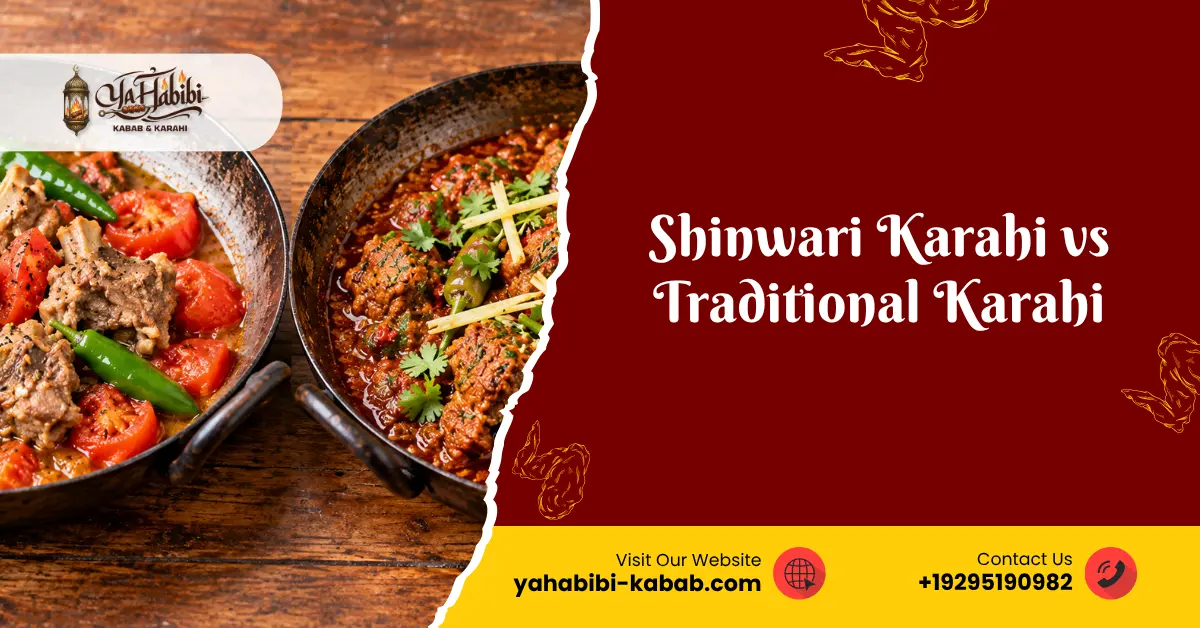
Shinwari karahi and the familiar restaurant-style karahi are both meat dishes cooked in a karahi, but they often build flavor in different ways. Shinwari-style cooking usually uses fewer seasonings so the meat and fresh ingredients stand out. A regular restaurant-style karahi may have a fuller sauce with a wider mix of spices.
That does not make one more traditional than the other. Shinwari is a traditional regional style, and cooks do not all follow the same recipe. If you are choosing between the two, think about the flavor you want—and ask how the restaurant makes each dish.
What Is Karahi?
A karahi is a deep, round cooking pan. The word also names the dish commonly cooked in it. Chicken, goat, and beef karahi are popular choices, but restaurants may offer other versions too.
In this article, “traditional karahi” means the familiar tomato-and-spice style found on many restaurant menus. It is a useful way to compare the dishes, but it is not the name of one fixed recipe. Shinwari karahi is traditional in its own right.
Shinwari Karahi vs Traditional Karahi: The Main Differences
The usual difference is where the cook puts the focus. Shinwari-style karahi often lets the meat lead, while a regular restaurant-style karahi may build more flavor into the sauce. The details depend on the kitchen.
|
Feature |
Shinwari-style karahi |
Familiar restaurant-style karahi |
|
Main focus |
Often brings out the flavor of the meat |
Builds flavor from the meat, sauce, and seasoning together |
|
Seasoning |
Often uses fewer seasonings |
May use a wider mix of spices |
|
Tomatoes |
Used in some versions and left out of others |
Commonly used to make the sauce |
|
Flavor |
Often simpler and more meat-forward |
Often has more layers of spice |
|
Heat |
Depends on the chilies and the kitchen |
Also depends on the recipe and the kitchen |
Shinwari does not automatically mean mild, tomato-free, or spice-free. For example, one Shinwari restaurant describes a version without tomatoes. Ya Habibi’s Chicken Shinwari Karahi, however, includes tomatoes, green chilies, ginger, garlic, and black pepper.
That is why the names alone cannot tell you exactly how two dishes will taste. Even when both versions use tomatoes, the amount and mix of seasoning can change the result. If an ingredient or spice level matters to you, check the restaurant’s description or ask before ordering.
Which Karahi Should You Order?
Neither style is the better choice for everyone. Pick the one that sounds closer to the meal you want, then check the restaurant’s current recipe.
Choose Shinwari Karahi If…
Try Shinwari-style karahi if you want the meat and a smaller set of fresh ingredients to stand out. Its simpler approach can still produce a strong, savory flavor.
Do not assume it will be gentle on your tongue. Green chilies can add plenty of heat, so ask about the spice level if you prefer mild food.
Choose a Regular Karahi If…
A regular restaurant-style karahi may suit you if you enjoy a sauce with more layers of spice. Tomatoes, ginger, garlic, chilies, and other seasonings can come together in different ways, so the flavor will vary by restaurant.
If you want to compare the two styles for yourself, ordering the same meat in each dish can make the difference easier to notice. Ask what comes with each order, since naan or rice may need to be ordered separately.
How Does Ya Habibi Make Shinwari Karahi?
At Ya Habibi Kabab & Karahi in Astoria, the Chicken Shinwari Karahi is described as a dish that uses fewer heavy spices and puts the flavor of the chicken and fresh ingredients first. Its listed ingredients include tomatoes, green chilies, ginger, garlic, and black pepper. Those are details of Ya Habibi’s version, not a rule for every Shinwari karahi.
The restaurant’s menu also lists Goat Shinwari Karahi and Shrimp Shinwari Karahi, along with regular Chicken, Goat, and Beef Karahi. This gives Astoria diners a chance to choose between styles and meats.
You can find Ya Habibi at 25-79 Steinway Street, Astoria, NY 11103. Browse the menu or call (929) 519-0982 to ask about the current preparation, spice level, and which bread or rice you might want with your dish.
Conclusion
Shinwari karahi generally takes a simpler, meat-forward approach. A familiar restaurant-style karahi may put more emphasis on a sauce built with several seasonings. The kitchen’s recipe decides the exact taste, so check before you order. If you are in Astoria, explore Ya Habibi’s karahi choices or call (929) 519-0982 to discuss the dish you would like to try.
Frequently Asked Questions
These answers cover a few details that dish names may leave unclear.
Is Shinwari karahi always less spicy?
No. Using fewer seasonings does not guarantee less heat. Green chilies can make a Shinwari karahi spicy, so ask the restaurant if you are unsure.
Does Shinwari karahi always have tomatoes?
No. Some recipes leave them out, while others include them. Ya Habibi’s Chicken Shinwari Karahi contains tomatoes.
Is Shinwari karahi only made with goat or lamb?
No. Restaurants also make chicken versions. Ya Habibi’s menu lists chicken, goat, and shrimp Shinwari karahi.
What goes well with karahi?
Naan works well for scooping up sauce, and rice is another choice. Check whether either comes with the dish before adding it to your order.