
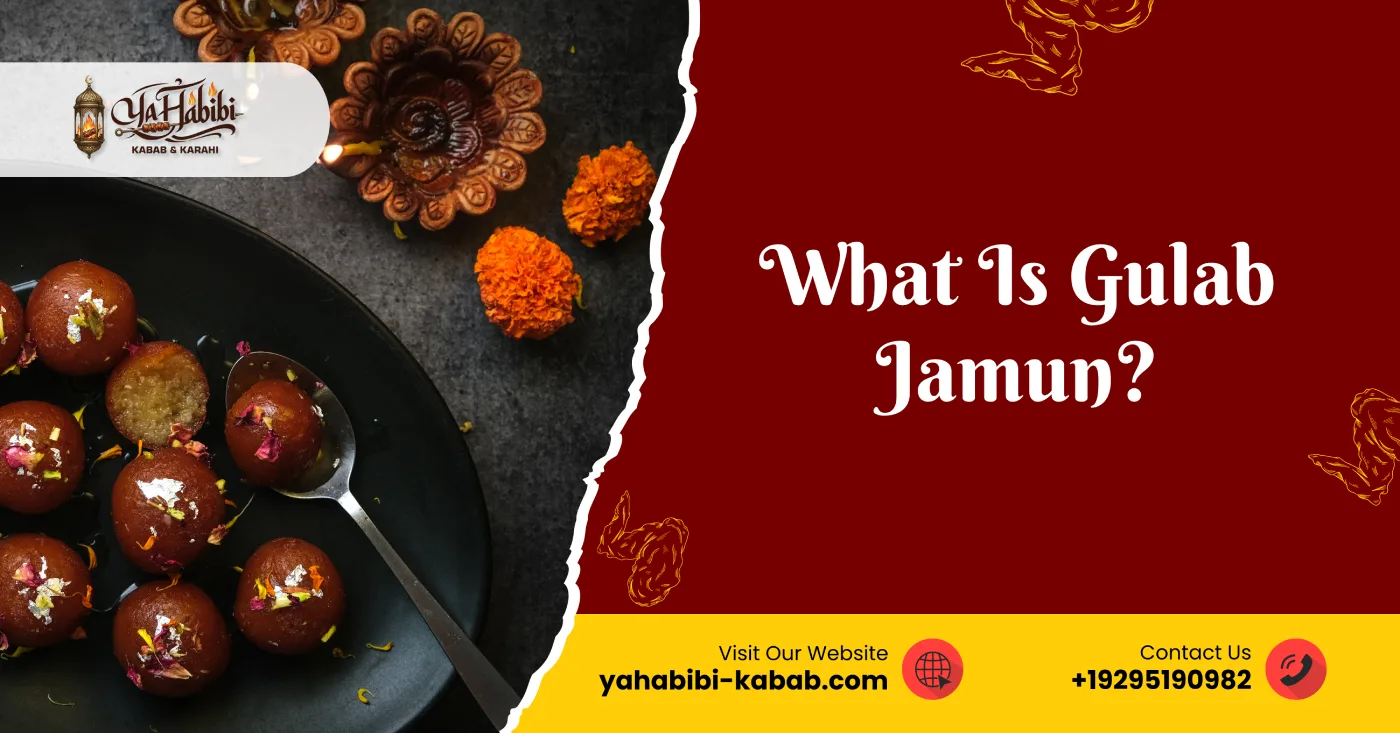
Gulab Jamun is a traditional South Asian dessert made from milk solids (khoya) or milk powder, shaped into small balls, deep-fried until golden brown, and soaked in a warm sugar syrup flavored with rose water, cardamom, or saffron. It is known for its soft texture, rich flavor, and syrup-filled center.
Why Is It Called Gulab Jamun?
The name Gulab Jamun comes from two words that describe the dessert's flavor and appearance. Understanding the name gives a glimpse into the cultural influences behind this iconic sweet.
The word "Gulab" comes from the Persian words gul (flower) and ab (water), meaning rose water. Traditional Gulab Jamun is soaked in a fragrant sugar syrup that is often flavored with rose water, giving the dessert its signature floral aroma and subtle sweetness.
Although some modern recipes use other flavorings such as saffron or cardamom, rose water remains one of the classic ingredients that inspired the dessert's name.
"Jamun" refers to the Indian black plum, a small purple fruit commonly found across the Indian subcontinent. While Gulab Jamun doesn't contain the fruit, the dessert was named after it because the fried dough balls resemble the fruit in shape. Traditional Gulab Jamun is usually golden to deep brown in color, depending on how long it is fried, while maintaining the same rounded appearance that inspired its name.
The History and Origin of Gulab Jamun
Gulab Jamun has a rich history that reflects centuries of cultural exchange and culinary innovation. While it is now considered one of the most iconic South Asian desserts, its roots can be traced to influences that traveled across regions before becoming a household favorite.
Where Did Gulab Jamun Originate?
Food historians generally believe that Gulab Jamun evolved during the Mughal era in the Indian subcontinent. Although the dessert is closely associated with India, Pakistan, and Bangladesh today, its cooking techniques and flavors were influenced by Persian and Central Asian cuisines introduced by the Mughals.
Over time, local cooks adapted these ideas by using ingredients that were readily available, such as khoya (reduced milk solids). The result was the soft, syrup-soaked dessert that is now enjoyed across South Asia and in restaurants around the world.
Persian and Mughal Culinary Influence
Persian cuisine played an important role in shaping many desserts that became popular during the Mughal Empire. Sweet treats flavored with rose water, fragrant spices, and sugar syrup were already common in Persian cooking.
As these culinary traditions blended with local ingredients and cooking methods, Gulab Jamun developed its own identity. The use of rose water in the syrup reflects its Persian heritage, while khoya and traditional frying techniques showcase the influence of South Asian cooking.
Today, Gulab Jamun remains a delicious example of how different culinary traditions came together to create a dessert that has stood the test of time.
How Is Gulab Jamun Made?
Making Gulab Jamun requires patience and attention to detail. Although the ingredient list is simple, each step plays an important role in creating the dessert's signature soft texture and rich flavor. Traditional recipes follow a time-tested process that has been passed down through generations.
Preparing the Dough
The process begins by combining khoya (or milk powder in some recipes) with a small amount of flour and other binding ingredients. The mixture is gently kneaded into a smooth, soft dough.
It's important not to overwork the dough, as this can make the finished Gulab Jamun dense instead of light and tender. The ideal dough should be soft, smooth, and free of cracks.
Shaping the Balls
Small portions of dough are rolled by hand into evenly sized balls. Each ball should have a smooth surface with no visible cracks, which helps prevent them from breaking apart during frying.
Keeping the balls uniform in size also ensures they cook evenly and absorb the sugar syrup at the same rate.
Deep Frying Until Golden Brown
The dough balls are fried slowly over medium to low heat until they develop a rich golden-brown color. Frying at a controlled temperature allows the inside to cook thoroughly while creating a lightly crisp exterior.
This careful process gives Gulab Jamun its distinctive appearance and helps it remain soft after soaking in syrup.
Soaking in Warm Sugar Syrup
After frying, the warm Gulab Jamun is placed directly into freshly prepared sugar syrup infused with flavors such as rose water, cardamom, or saffron.
The dessert is left to soak until it absorbs the syrup, becoming soft, juicy, and full of flavor. This final step is what gives Gulab Jamun its signature melt-in-your-mouth texture and sweet, aromatic finish.
What Does Gulab Jamun Taste Like?
Gulab Jamun is loved not only for its sweetness but also for its rich texture and delicate aroma. Every bite combines soft dough, fragrant syrup, and subtle spices to create a comforting dessert that's both simple and satisfying.
Texture
A well-made Gulab Jamun is exceptionally soft and moist. The outer layer is smooth and tender, while the inside is light and sponge-like, allowing it to absorb the flavorful syrup without becoming soggy.
Sweetness
Gulab Jamun is sweet, but its flavor is balanced by the warm spices and floral notes in the syrup. The sweetness comes mainly from the syrup that soaks into the dessert, giving each bite a rich and satisfying taste without overwhelming the palate.
Many restaurants carefully balance the syrup to achieve a pleasant sweetness rather than an overly sugary finish.
Flavor Profile
The flavor of Gulab Jamun is rich, creamy, and comforting. The milk solids provide a deep dairy richness, while ingredients like cardamom, saffron, and rose water add subtle layers of flavor.
Depending on the recipe, you may also notice hints of caramel from the slow frying process, giving the dessert extra depth and warmth.
Aroma
One of the first things you'll notice about Gulab Jamun is its inviting aroma. Traditional recipes are lightly scented with rose water and cardamom, creating a fragrant dessert that complements its rich taste.
After enjoying savory dishes like kababs or karahi, many diners appreciate Gulab Jamun as a classic way to end the meal. At Ya Habibi Kabab & Karahi in Astoria, guests can experience authentic flavors from across the Middle East and South Asia, making a traditional dessert the perfect finishing touch to a memorable dining experience.
When Is Gulab Jamun Traditionally Served?
Gulab Jamun is more than just a dessert, it's a symbol of celebration and hospitality across South Asia. While it's enjoyed throughout the year, it holds a special place during life's biggest moments and festive occasions.
Weddings
No traditional South Asian wedding feast feels complete without dessert, and Gulab Jamun is often one of the highlights of the menu. Its rich flavor and soft texture make it a favorite among guests of all ages.
Whether served warm after the main course or alongside other traditional sweets, Gulab Jamun adds a memorable finish to wedding celebrations.
Religious Festivals
Gulab Jamun is commonly prepared during major religious festivals such as Eid, Diwali, Holi, and other cultural celebrations. Families often make large batches at home or purchase them from trusted sweet shops to share with relatives, neighbors, and guests.
Serving Gulab Jamun during festivals reflects the tradition of celebrating joyful occasions with homemade meals and sweet treats.
Family Gatherings
From birthdays and anniversaries to weekend dinners and holiday meals, Gulab Jamun is a dessert that brings people together. Many families enjoy serving it after a homemade feast, while others order it from their favorite local restaurant to complete the meal.
Its familiar flavor and comforting sweetness have made it a dessert that is passed down through generations.
Restaurant Desserts
Today, Gulab Jamun is a staple dessert at many South Asian restaurants around the world. It's often served after flavorful dishes such as kababs, biryani, curries, or karahi, providing a sweet contrast to bold spices and savory flavors.
Many restaurants serve it warm, sometimes paired with vanilla ice cream for a modern twist, while others stay true to the traditional presentation with fragrant sugar syrup and light garnishes.
Where Can You Enjoy Authentic Gulab Jamun?
The best Gulab Jamun is freshly prepared using quality ingredients and served at the proper temperature. Freshly made desserts tend to have a softer texture, absorb the syrup more evenly, and deliver a richer flavor than mass-produced alternatives.
Restaurant-quality Gulab Jamun is carefully prepared to achieve the perfect balance of tenderness and sweetness. From the smooth dough to the aromatic syrup infused with cardamom and rose water, every step contributes to the dessert's signature taste.
If you're exploring Astoria's diverse dining scene, Ya Habibi Kabab & Karahi is a great place to enjoy authentic Middle Eastern cuisine along with popular South Asian favorites. After savoring freshly grilled kababs, flavorful karahi, or other traditional dishes, complete your meal with a classic dessert like Gulab Jamun if it's available on the menu. It's a simple yet satisfying way to end your dining experience.
Whether you're dining with family, meeting friends, or ordering takeout, Ya Habibi Kabab & Karahi is committed to serving freshly prepared dishes made with quality ingredients and traditional recipes.
Conclusion
Gulab Jamun has earned its place as one of the most beloved South Asian desserts through its rich history, simple ingredients, and unmistakable flavor. Its soft texture, fragrant sugar syrup, and comforting sweetness have made it a favorite at weddings, religious festivals, family gatherings, and restaurants for generations.
Now that you know what Gulab Jamun is, how it's made, and why it remains so popular, the best way to appreciate it is to taste an authentic version prepared with care.
If you're in Astoria and looking to enjoy a memorable meal, visit Ya Habibi Kabab & Karahi. From freshly prepared kababs and traditional specialties to delicious desserts like Gulab Jamun (when available), we invite you to experience the warm hospitality and rich flavors that have made these cuisines loved around the world.
Frequently Asked Questions About Gulab Jamun
What is Gulab Jamun made of?
Gulab Jamun is traditionally made with khoya (milk solids), flour, and a leavening agent. The dough is deep-fried and soaked in sugar syrup flavored with rose water, cardamom, or saffron.
Why is Gulab Jamun so soft?
Its soft texture comes from using khoya, gently mixing the dough, frying at a low temperature, and soaking it in warm sugar syrup.
Is Gulab Jamun served hot or cold?
Gulab Jamun can be served warm, at room temperature, or chilled. Many people prefer it warm for the best flavor and texture.
Can Gulab Jamun be made without khoya?
Yes. Many recipes use milk powder instead of khoya, although the texture and richness may vary slightly.
What is the difference between Gulab Jamun and Rasgulla?
Gulab Jamun is made from khoya, deep-fried, and has a soft, rich texture. Rasgulla is made from fresh chhena, boiled in syrup, and has a light, spongy texture.