
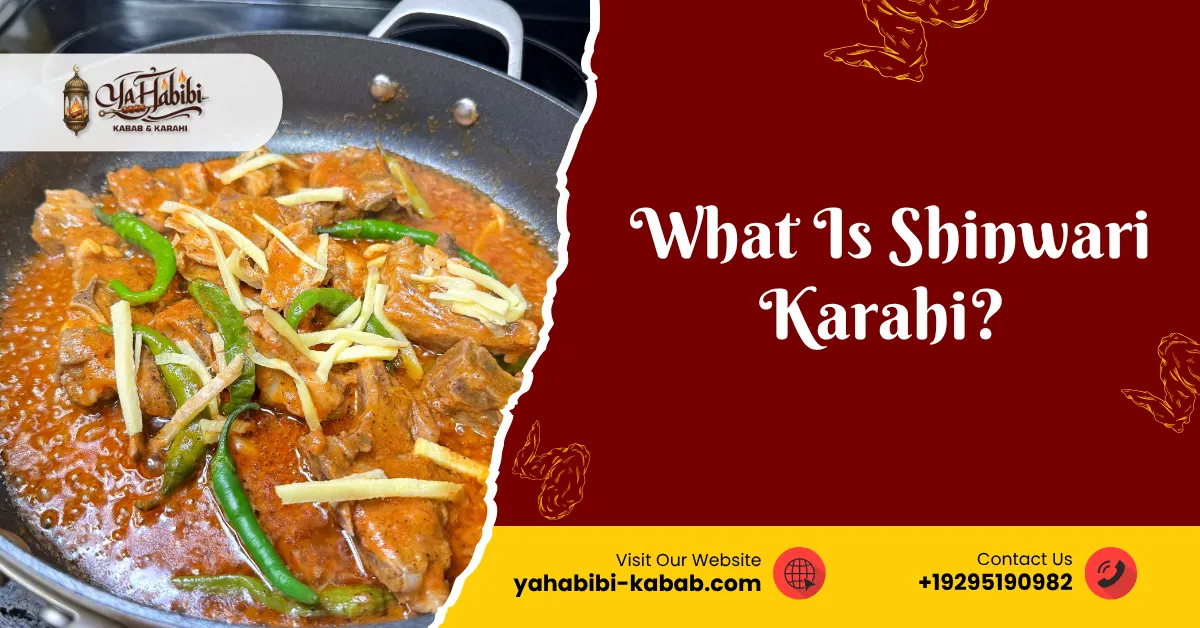
Shinwari Karahi is a meat-focused karahi associated with Pashtun cooking traditions of the Khyber region. Unlike many karahi recipes built around several ground spices, Shinwari-style cooking keeps the seasoning simple so the flavor of the meat remains at the center.
Traditionally associated with mutton or lamb, the dish may use ingredients such as tomatoes, green chilies, salt, and black pepper. Recipes differ, but simplicity is a defining feature.
Here is where Shinwari Karahi comes from, what goes into it, how it tastes, and what makes it different from other types of karahi.
What Is Shinwari Karahi?
Shinwari Karahi is a style of karahi gosht, meaning meat cooked in a karahi—a deep, round, wok-like cooking vessel that also gives the dish its name. Historical food writing connects karahi gosht with the Khyber Pakhtunkhwa region and Landi Kotal near the Khyber Pass.
Mutton and lamb have a particularly strong association with this style of cooking, although chicken versions are widely prepared today.
What sets Shinwari Karahi apart is its restraint. Instead of covering the meat with a long list of spices, the cook relies on good meat, cooking fat, heat, salt, pepper, chilies, and—in many versions—fresh tomatoes.
The result is a karahi where you can still clearly taste the meat.
Where Did Shinwari Karahi Originate?
Shinwari Karahi takes its name from the Shinwari Pashtun community, whose historical presence is closely connected with the western Khyber Pass and the area around Landi Kotal. Encyclopaedia Iranica identifies the Shinwari as one of the major Pashtun groups associated with the Khyber area, particularly west of Landi Kotal.
Landi Kotal itself has a long food culture centered around meat. The town's bazaar remains known for traditional mutton karahi and seekh tikka, attracting visitors from Peshawar and surrounding areas.
As Shinwari-style restaurants spread to Peshawar and other Pakistani cities, the name became increasingly associated with a simple, meat-centered style of Pashtun cooking.
What Spices Are Used in Shinwari Karahi?
One of the most interesting things about Shinwari Karahi spices is how short the list can be.
Common seasonings include:
- Salt
- Crushed or freshly ground black pepper
- Fresh green chilies
Many recipes also include fresh tomatoes, while ginger and garlic appear in some versions.
For example, widely published chicken and mutton Shinwari Karahi recipes use tomatoes, green chilies, black pepper, salt, and only a small number of additional aromatics.
You will generally find fewer ground spices than in many other South Asian karahi dishes. Turmeric, chili powder, coriander powder, garam masala, and complex spice mixes are not necessarily central to the Shinwari approach.
That simpler seasoning is intentional: the meat should remain the main flavor.
How Is Shinwari Karahi Traditionally Cooked?
Shinwari Karahi is cooked in a karahi over direct heat.
Mutton or lamb is commonly cut into manageable pieces and cooked with fat or oil until it begins to become tender. Traditional versions may use rendered animal fat, although cooking oil or ghee is common in restaurant and home adaptations.
Tomatoes may then be added and cooked until they soften and release their juices. Salt, black pepper, and green chilies provide seasoning without creating a heavy masala.
The dish is cooked until the meat becomes tender and the liquid reduces enough to coat it.
Rather than building several layers of powdered spices, Shinwari cooking gets much of its character from the meat, fat, heat, and reduction process.
What Does Shinwari Karahi Taste Like?
Shinwari Karahi has a rich, savory, and meat-forward taste.
Fresh green chilies may provide mild to moderate heat, while black pepper adds a sharper finish. If tomatoes are used, they bring acidity and help create a light sauce around the meat.
The dish can taste rich because of the cooking fat, but it is usually not dominated by a thick, heavily spiced gravy.
And although Shinwari Karahi uses fewer spices, that does not mean it lacks flavor. Its character comes from concentrating a smaller number of ingredients during cooking.
Shinwari Karahi vs Regular Karahi
“Karahi” covers many regional and restaurant styles, so there is no single recipe that represents every regular karahi. Still, there are some useful general differences.
|
Feature |
Shinwari Karahi |
Many Other Karahi Styles |
|
Main focus |
Meat flavor |
Meat and seasoned gravy |
|
Spices |
Usually limited |
Often uses more ground spices |
|
Heat |
Green chilies and black pepper |
May include chili powder and other spices |
|
Onions |
Often omitted |
May be included |
|
Tomatoes |
Common in many versions |
Common |
|
Cooking style |
Simple cooking and reduction |
May involve a more developed masala |
|
Flavor |
Meat-forward and peppery |
Often more heavily spiced |
The biggest difference is not simply the level of heat. It is the number of seasonings competing with the meat.
Shinwari-style cooking generally keeps that number low.
Is Shinwari Karahi the Same as Peshawari Karahi?
The terms Shinwari Karahi and Peshawari Karahi sometimes overlap, especially on restaurant menus.
That makes sense because Shinwari cooking is closely connected with the broader food traditions of Khyber and Peshawar. Karahi gosht itself is strongly associated with Peshawar, Landi Kotal, and surrounding areas.
However, the names should not always be treated as interchangeable.
One restaurant may call a simple mutton, tomato, pepper, and chili preparation Peshawari Karahi, while another may call a similar dish Shinwari Karahi. Ingredient choices and cooking techniques can also change from one cook to another.
It is better to look at the recipe and preparation rather than assuming the names guarantee one fixed formula.
What Is Served With Shinwari Karahi?
Because Shinwari Karahi is rich and meat-focused, simple sides work particularly well with it.
Common pairings include:
- Fresh naan or roti
- Salad
- Yogurt or raita
- Fresh green chilies
Naan is especially useful for picking up the meat juices and tomato-based sauce left in the karahi.
A cool salad or yogurt-based side can provide contrast to the warm meat, pepper, and chilies.
Where to Enjoy Karahi and Grilled Flavors in Astoria
If you live in Astoria or are visiting Steinway Street, exploring karahi alongside grilled meat dishes is one way to experience the combination of meat, spices, and high-heat cooking found across several regional food traditions.
Ya Habibi Kabab & Karahi serves karahi, kababs, grilled meats, and freshly prepared dishes seasoned with aromatic spices. The restaurant is located at 25-79 Steinway St, Astoria, NY 11103.
Stop by Ya Habibi Kabab & Karahi to explore the restaurant's karahi and grilled dishes, or check the menu before your visit.
Conclusion
Shinwari Karahi stands apart because of its simple seasoning and strong focus on meat.
Its roots are closely tied to Shinwari Pashtun food culture and the Khyber region, where mutton karahi remains part of the local dining tradition. Instead of relying on a large masala blend, many Shinwari-style preparations build flavor with meat, fat, tomatoes, green chilies, salt, and black pepper.
Recipes have changed as the dish has traveled, but that meat-first approach remains one of its clearest characteristics.
If you are in Astoria and want to explore karahi, kababs, and grilled dishes, visit Ya Habibi Kabab & Karahi on Steinway Street.
Frequently Asked Questions
What is Shinwari Karahi made of?
Shinwari Karahi is commonly made with mutton or lamb, cooking fat or oil, salt, black pepper, green chilies, and often tomatoes. Some versions also use ginger or garlic. Chicken variations are also popular.
Is Shinwari Karahi spicy?
Shinwari Karahi can have some heat from fresh green chilies and black pepper, but it is generally known for using fewer spices than many other karahi recipes. The exact heat level depends on the cook and the amount of chili used.
Does Shinwari Karahi have tomatoes?
Many Shinwari Karahi recipes use fresh tomatoes, although preparations vary by region, restaurant, and family recipe. Tomatoes are therefore common, but they should not be treated as proof of one universal Shinwari recipe.
Is Shinwari Karahi made with chicken or mutton?
Mutton and lamb are strongly associated with traditional Shinwari and Landi Kotal meat cooking. Chicken Shinwari Karahi is also widely prepared today.
What is the difference between Shinwari Karahi and regular Karahi?
Shinwari Karahi usually uses fewer spices and puts greater emphasis on the natural flavor of the meat. Many other karahi styles use a broader mixture of spices and may create a more heavily seasoned sauce or masala.